
Practical civil safety and confined space training
Industry‑focused units and course sets for safe on‑site operations, permit systems and rescue preparedness.
Construction, Industry Safety Training & Resources

Hazard Analysis & Work Permits
(MSMWHS201 & MSMPER300)
Course Description
This course set teaches participants the skills and knowledge required to complete a hazard analysis, specify risk controls to reduce risks to ALARP, identify relevant personnel, complete hazard analysis documentation, and monitor and review the effectiveness of risk controls.
It is also designed for those required to issue work permits where hazards exist or specific procedures must be followed to protect personnel and plant integrity. Participants will gain an understanding of permit systems, permit limitations, and how to determine the correct permit for a task.
Participants will learn the significance of analysis context, how hazards may cause harm, and how to apply a risk matrix. Skills are applied in accordance with Commonwealth and State/Territory legislation, Australian/New Zealand standards, and industry codes of practice.
No licensing, legislative or certification requirements apply to these units at the time of publication.
Units Delivered
The following units will be included in your certificate:
- MSMPER300 – Issue work permits
- MSMWHS201 – Conduct hazard analysis
Course Delivery
This course can be delivered/assessed in the workplace or at a facility organised by the training provider.
Course Durations
Course durations can vary for multiple reasons, so the durations below are the minimum possible amount.
- Refresher: Minimum 7 hours face-to-face
- Face-to-Face: Minimum 7 hours
Entry Requirements
- Completion of MSMWHS201 Conduct hazard analysis prior to MSMPER300 Issue work permits.
- Physical capacity to meet the demands of practical demonstrations, including wearing and working in relevant PPE.
- Ability to speak clearly and unambiguously in the language of the worksite.
- Ability to undertake and interpret hazard analysis, conduct and interpret tests/inspections, and ensure correct worksite preparation for issuing permits.
Assessment Requirements
Participants will be required to complete both written and practical assessment tasks.
Certificate Renewal Requirements
The units have the following recommended renewal periods:
| Unit | Period |
|---|---|
| MSMPER300 – Issue work permits | Not applicable |
| MSMWHS201 – Conduct hazard analysis | Not applicable |
Learner Rights, Responsibilities & Support
Enrolment in this course is made with Allens Training Pty Ltd RTO 90909. Please refer to the student handbook located on the RTO website (https://allenstraining.com.au/students/student-handbook) for all details relating to rights and responsibilities including complaints and appeals.
Assessment Activities
Performance tasks:
- Prepare for a hazard analysis
- Identify hazards
- Assess risks
- Control risks
- Review controls
- Identify and raise the required work permit
- Issue the permit and prepare for work
- Receive end‑of‑day report and close the permit
Documentation:
- Hazard analysis form
Theory assessment:
A written assessment consisting of short‑answer and multiple‑choice questions.
Core Skill Requirements
Students must complete a self‑evaluation against the following core skills as part of the enrolment process.
- Learning: I can follow safety procedures, remember steps, and apply what I’ve learned to reduce risks.
- Reading: I can read and understand safety instructions, permit conditions, and written procedures.
- Writing: I can clearly record information like hazards, approvals, times, or conditions on safety forms.
- Oral Communication: I can ask questions and speak clearly to confirm safety requirements with others.
- Numeracy: I can use time, dates, and simple numbers to plan checks and ensure safety steps are followed correctly.
Please contact for pricing
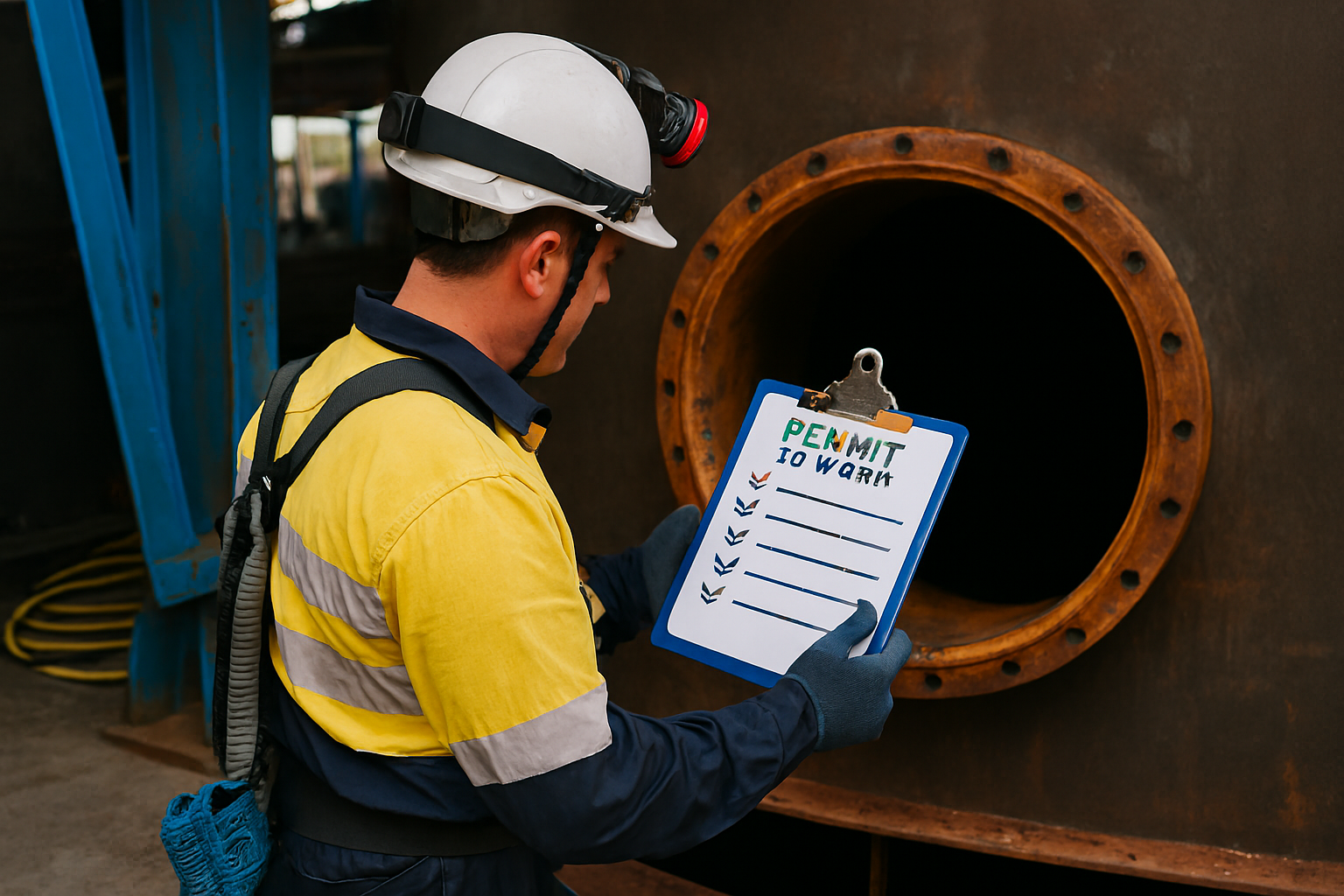
Confined Space Entry & Work Permits
(RIIWHS202E & MSMPER200)
Course Description
This course set is designed for new and experienced personnel required to work in confined spaces and conduct work activities under the authority of an issued permit to work. It applies to maintenance staff, contractors, and anyone performing non‑process work under a permit system.
Participants will learn to understand permit systems, permit limitations, and compliance requirements. They will also learn to distinguish what constitutes a confined space, key terminology, and the legislative and regulatory requirements governing confined space entry.
Participants will identify hazards and emergencies, implement control measures, conduct risk assessments, and apply for confined space entry permits. Students will demonstrate safe entry, exit, and work procedures for both horizontal and vertical confined space scenarios.
Practical components include selecting and inspecting PPE, operating atmospheric testing and monitoring devices, and conducting routine servicing of confined space safety equipment.
Units Delivered
The following units will be included in your certificate:
- MSMPER200 – Work in accordance with an issued permit
- RIIWHS202E – Enter and work in confined spaces
Course Delivery
This course can be delivered/assessed in the workplace or at a facility organised by the training provider.
Course Durations
Course durations can vary for multiple reasons, so the durations below are the minimum possible amount.
- Refresher: Minimum 5 hours face-to-face
- Face-to-Face: Minimum 9 hours
- Online with face-to-face assessment: Minimum 4 hours
Entry Requirements
- Psychological and physical capability to safely enter, work in, and exit confined spaces while wearing appropriate PPE. This may involve climbing, crawling, suspension, and working in dark, low‑light or smoke‑filled environments.
- Students must provide and wear protective footwear/safety shoes and practical clothing during practical sessions and assessment.
- Language, literacy and numeracy skills sufficient to read and interpret confined space documentation, communicate clearly in English, complete workplace forms, and interpret gas test/monitoring results.
- Consideration should be given to physical ability, ability to work in restrictive spaces (e.g., claustrophobia), and ability to wear required PPE (e.g., respirators).
Assessment Requirements
Individuals undertaking this course will be expected to complete both written and practical assessment tasks.
Certificate Renewal Requirements
The units have the following recommended renewal periods:
| Unit | Period |
|---|---|
| MSMPER200 – Work in accordance with an issued permit | Not applicable |
| RIIWHS202E – Enter and work in confined spaces | Not applicable |
Learner Rights, Responsibilities & Support
Enrolment in this course is made with Allens Training Pty Ltd RTO 90909. Please refer to the student handbook located on the RTO website (https://allenstraining.com.au/students/student-handbook) for all details relating to rights and responsibilities including complaints and appeals.
Assessment Activities
Performance tasks:
- Perform a horizontal and a vertical entry into a confined space
- Apply tagging and lock out procedures
- Confirm the scope and location of the work
- Determine if a permit is required
- Identify and raise the required work permit
- Verify hazard controls match the hazard analysis
- Use atmospheric monitoring devices prior to entry
- Interpret readings and take required action
- Maintain testing and monitoring equipment
- Work in accordance with an issued permit
- Monitor work for compliance and respond to changing conditions
- Display issued permit on site as required
- Ensure compliance with scope, location and timeframe
- Seek variations or new permits when required
- Suspend work and make the site safe before leaving
- Seek authorised extensions when required
- Provide end‑of‑day status report
- Demonstrate concluding operation techniques
Documentation:
- Complete two JSEA/SWMS forms
- Apply for and obtain confined space entry permits (horizontal and vertical)
- Record atmospheric testing results
- Sign onto/receive the permit
- Seek and receive authorised extensions when required
Theory assessment:
A written assessment consisting of short‑answer and multiple‑choice questions.
Core Skill Requirements
Students must complete a self‑evaluation against the following core skills as part of the enrolment process.
- Learning: I can follow safety instructions, ask questions, and apply what I’ve learned to work safely under a permit.
- Reading: I can read and understand work permits, safety rules, and basic confined space procedures.
- Writing: I can complete short forms or checklists and write simple notes if needed.
- Oral Communication: I can speak clearly, ask questions, and confirm instructions to ensure safe work.
- Numeracy: I can use numbers to check times, measurements, and other details related to safe work.
Please contact for pricing
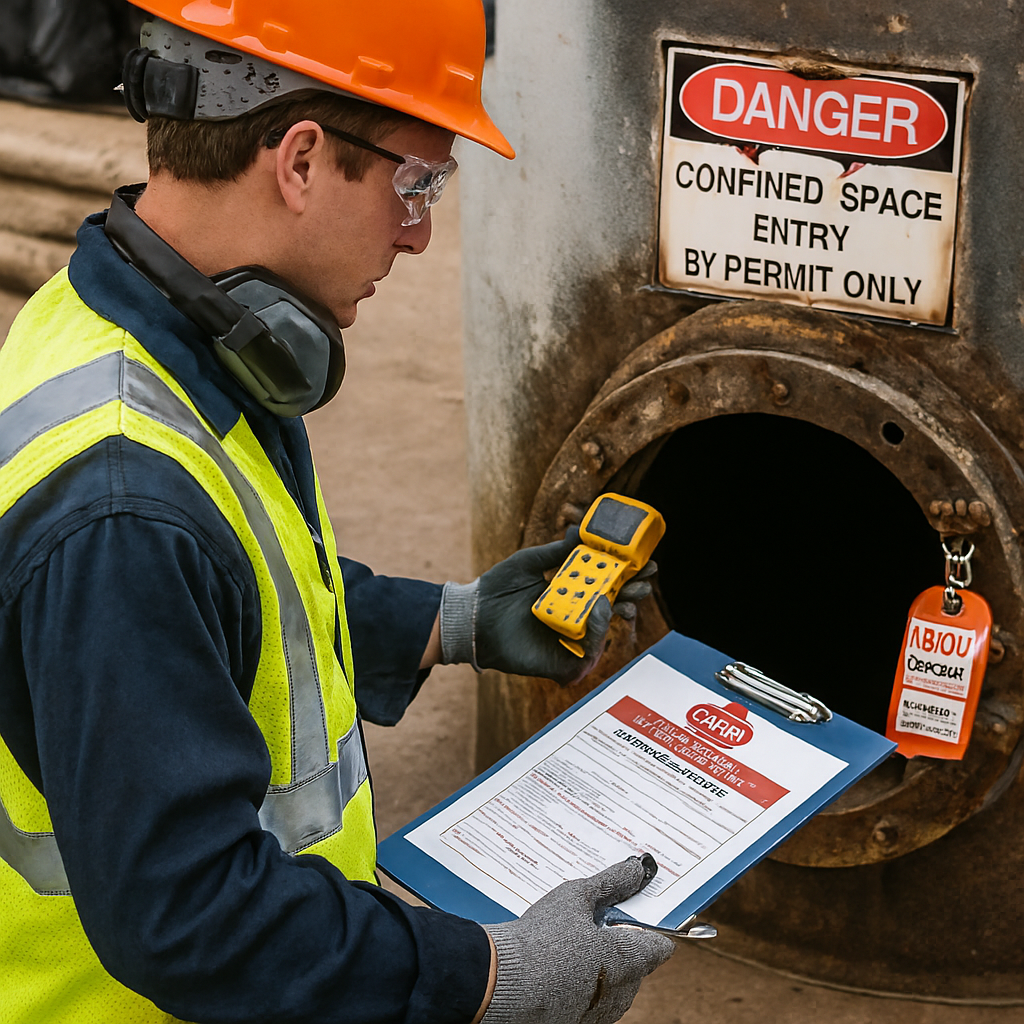
Confined Space Entry, Gas Testing & Work Permits
(RIIWHS202E, MSMPER200 & MSMWHS217)
Course Description
This course set is designed for new and experienced personnel who are required to work in confined spaces, gas test atmospheres, and conduct work activities under the authority of an issued permit to work within the construction, resources and infrastructure industries.
Participants will learn to identify confined space hazards, work safely within confined spaces according to an issued permit, and operate a range of confined space safety equipment. This includes atmospheric gas testing, interpreting results, and taking appropriate action.
Students will demonstrate safe entry, exit and work procedures for both horizontal and vertical confined space scenarios. They will also inspect and select appropriate PPE, operate gas testing/monitoring devices, and conduct routine servicing of equipment.
Units Delivered
The following units will be included in your certificate:
- MSMPER200 – Work in accordance with an issued permit
- MSMWHS217 – Gas test atmospheres
- RIIWHS202E – Enter and work in confined spaces
Course Delivery
This course can be delivered/assessed in the workplace or at a facility organised by the training provider.
Course Durations
Course durations can vary for multiple reasons, so the durations below are the minimum possible amount.
- Refresher: Minimum 5 hours face-to-face
- Face-to-Face: Minimum 9 hours
- Online with face-to-face assessment: Minimum 4 hours 30 minutes
Entry Requirements
- Psychological and physical capability to safely enter, work in, and exit confined spaces while wearing PPE. This may involve climbing, crawling, suspension, and working in dark, low‑light or smoke‑filled environments.
- Students must provide and wear protective footwear/safety shoes and practical clothing during practical sessions and assessment.
- Language, literacy and numeracy skills sufficient to interpret documentation, communicate clearly in English, complete workplace forms, and interpret gas test/monitoring results.
- Consideration should be given to physical ability, ability to work in restrictive spaces (e.g., claustrophobia), and ability to wear required PPE (e.g., respirators).
Assessment Requirements
Individuals undertaking this course will be expected to complete both written and practical assessment tasks.
Certificate Renewal Requirements
The units have the following recommended renewal periods:
| Unit | Period |
|---|---|
| MSMPER200 – Work in accordance with an issued permit | Not applicable |
| MSMWHS217 – Gas test atmospheres | Not applicable |
| RIIWHS202E – Enter and work in confined spaces | Not applicable |
Learner Rights, Responsibilities & Support
Enrolment in this course is made with Allens Training Pty Ltd RTO 90909. Please refer to the student handbook located on the RTO website (https://allenstraining.com.au/students/student-handbook) for all details relating to rights and responsibilities including complaints and appeals.
Assessment Activities
Performance tasks:
- Perform a horizontal and a vertical entry into a confined space
- Confirm the scope and location of the work
- Identify and raise the required work permit
- Prepare for permitted work
- Identify hazards and verify hazard controls match the hazard analysis
- Use atmospheric monitoring devices prior to entry
- Interpret readings and take required action
- Maintain testing and monitoring equipment
- Monitor work for compliance and respond to changing conditions
- Seek variations or new permits when required
- Receive authorised extensions when required
- Identify and act on non‑compliance
- Withdraw or cancel permit if conditions warrant it
- Provide end‑of‑day status report
- Demonstrate concluding operation techniques
Documentation:
- Complete two JSEA/SWMS forms
- Apply for and obtain confined space entry permits (horizontal and vertical)
- Record atmospheric testing results
- Complete work permit documentation
Theory assessment:
A written assessment consisting of short‑answer and multiple‑choice questions.
Core Skill Requirements
Students must complete a self‑evaluation against the following core skills as part of the enrolment process.
- Learning: I can follow clear safety steps, learn from instructions, and check that the environment is safe before starting.
- Reading: I can read and understand permits, safety instructions, warning signs, and gas monitor displays.
- Writing: I can complete basic forms or write short notes to record hazards, air test results, or permit details.
- Oral Communication: I can ask questions, explain safety results, and speak clearly to confirm instructions with others.
- Numeracy: I can use numbers to read gas levels, check times, and confirm if a site is safe for entry or work.
Please contact for pricing
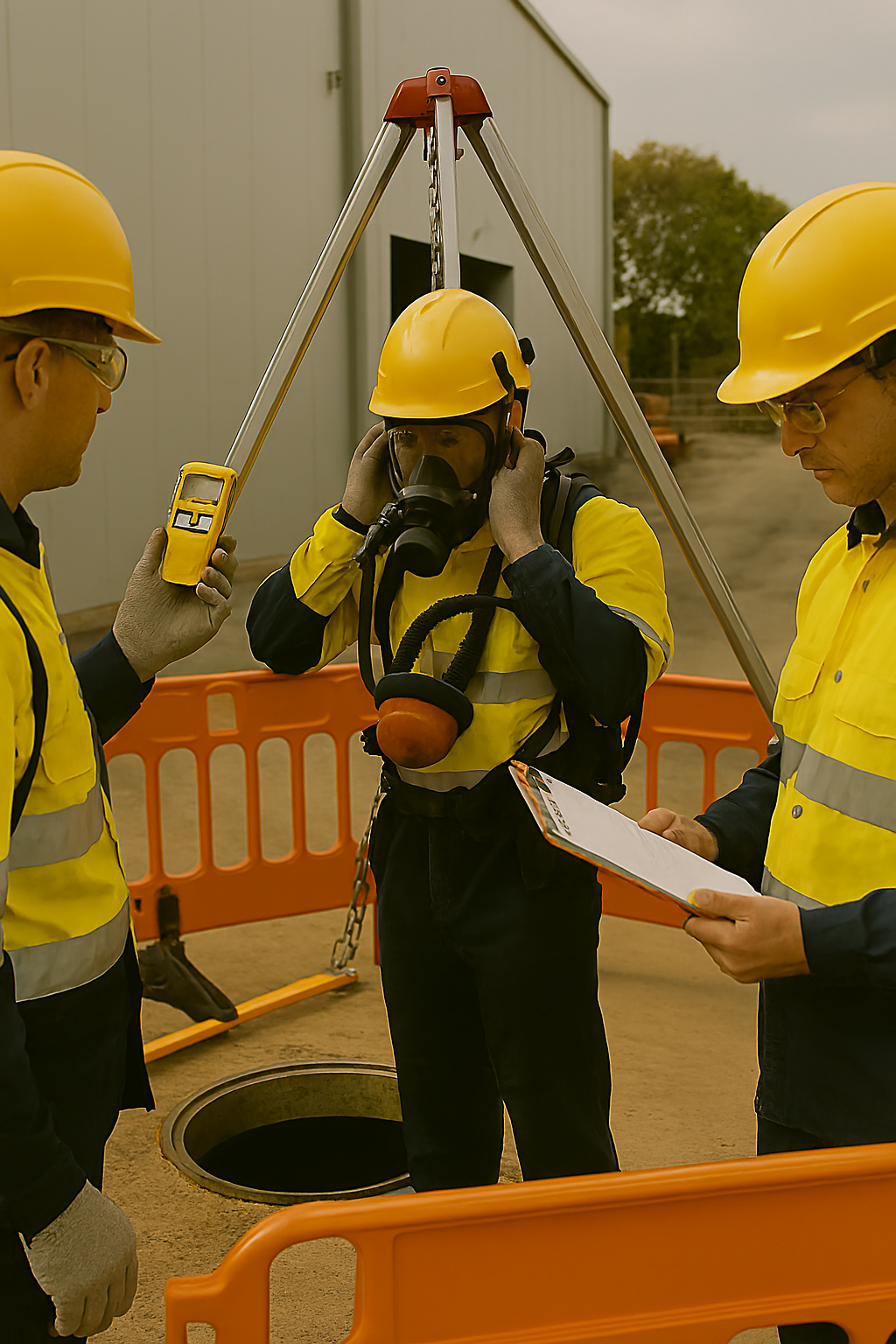
Confined Space, Breathing Apparatus, Gas Testing, Work Permits & Hazard Control
(RIIWHS202E, MSMWHS201, MSMPER300, MSMWHS216 & MSMWHS217)
Course Description
This course set is designed for new and experienced personnel required to work in confined spaces; operate confined space safety equipment including atmospheric gas testing and breathing apparatus; conduct hazard analysis; and issue work permits in the resources and infrastructure industries.
It applies to individuals working alone or as part of a team to conduct hazard analysis, which may be required under a safety case, organisational procedures, or as good practice. Participants will gain the skills and knowledge required to conduct a hazard analysis.
This course also applies to individuals who require an understanding of permit systems, permit limitations, and correct permit use. This includes issuing any and all permits (also known as “clearances” in some organisations).
Participants will also learn to carry out gas testing of an atmosphere prior to entering a workspace. Students will learn to test atmospheres, interpret readings, and take appropriate action.
Finally, this course covers the skills and knowledge required to operate breathing apparatus in irrespirable atmospheres, including pre‑donning checks, equipment operation, maintenance, and concluding operations in accordance with AS/NZS 1715:2009.
Units Delivered
The following units will be included in your certificate:
- MSMPER300 – Issue work permits
- MSMWHS201 – Conduct hazard analysis
- MSMWHS216 – Operate breathing apparatus
- MSMWHS217 – Gas test atmospheres
- RIIWHS202E – Enter and work in confined spaces
Course Delivery
This course can be delivered/assessed in the workplace or at a facility organised by the training provider.
Course Durations
Course durations can vary for multiple reasons, so the durations below are the minimum possible amount.
- Refresher: Minimum 10 hours face-to-face
- Face-to-Face: Minimum 16 hours
Entry Requirements
- Participants must be clean shaven to attend the course. Breathing apparatus requires a clean seal between the face and mask in accordance with manufacturer specifications.
- To complete MSMPER300 Issue work permits, students must hold the pre‑requisite unit MSMWHS201 Conduct hazard analysis.
- Psychological and physical capability to safely enter, work in, and exit confined spaces while wearing PPE. This may involve climbing, crawling, suspension, and working in dark, low‑light or smoke‑filled environments.
- Students must provide and wear protective footwear/safety shoes and practical clothing during practical sessions and assessment.
- Language, literacy and numeracy skills sufficient to interpret documentation, communicate clearly in English, complete workplace forms, and interpret gas test/monitoring results.
- Consideration should be given to physical ability, ability to work in restrictive spaces (e.g., claustrophobia), and ability to wear required PPE (e.g., respirators).
Assessment Requirements
Individuals undertaking this course will be expected to complete both written and practical assessment tasks.
Certificate Renewal Requirements
The units have the following recommended renewal periods:
| Unit | Period |
|---|---|
| MSMPER300 – Issue work permits | Not applicable |
| MSMWHS201 – Conduct hazard analysis | Not applicable |
| MSMWHS216 – Operate breathing apparatus | Not applicable |
| MSMWHS217 – Gas test atmospheres | Not applicable |
| RIIWHS202E – Enter and work in confined spaces | Not applicable |
Learner Rights, Responsibilities & Support
Enrolment in this course is made with Allens Training Pty Ltd RTO 90909. Please refer to the student handbook located on the RTO website (https://allenstraining.com.au/students/student-handbook) for all details relating to rights and responsibilities including complaints and appeals.
Assessment Activities
Performance tasks:
- Perform a horizontal and a vertical entry into a confined space
- Complete a hazard analysis:
- Prepare for the hazard analysis
- Identify hazards
- Assess risks
- Control risks
- Review controls
- Identify and raise the required work permit
- Issue the permit and prepare for work
- Receive end‑of‑day report and close the permit
- Use atmospheric monitoring devices prior to entry
- Test for atmospheric hazards including explosivity, flammability, toxicity, temperature, humidity, combustibles, electricity or stored pressure/energy
- Interpret readings and take required action
- Maintain testing and monitoring equipment
- Prepare the worksite:
- Mechanical, electrical or other energy isolations
- De‑energising energy/pressure sources
- Purging or ventilating plant
- Lockout/tagout procedures
- Blinding/blanking lines
- Other hazard controls
- Operate breathing apparatus (open circuit):
- Conduct pre‑donning checks and tests
- Identify faults and report issues
- Operate BA in simulated or actual environments
- Demonstrate concluding operation techniques
- Monitor work for compliance and respond to changing conditions
- Identify and act on non‑compliance
- Withdraw or cancel permit if required
- Provide end‑of‑day status report
- Demonstrate concluding operation techniques
Documentation:
- Complete two JSEA/SWMS forms
- Apply for and obtain confined space entry permits (horizontal and vertical)
- Record atmospheric testing results
- Complete an equipment fault log
- Label breathing apparatus components
- Close a work permit
Theory assessment:
A written assessment consisting of short‑answer and multiple‑choice questions.
Core Skill Requirements
Students must complete a self‑evaluation against the following core skills as part of the enrolment process.
- Learning: I can follow safety steps, ask questions when unsure, and apply what I’ve learned to handle risks and use safety equipment.
- Reading: I can read and understand safety instructions, warning signs, permits, and procedures.
- Writing: I can fill in forms, checklists, and logs clearly with the correct safety information.
- Oral Communication: I can speak clearly, ask questions, and share important safety information with my team or supervisor.
- Numeracy: I can use numbers, times, and readings to follow safety procedures, check equipment, and plan work safely.
Please contact for pricing
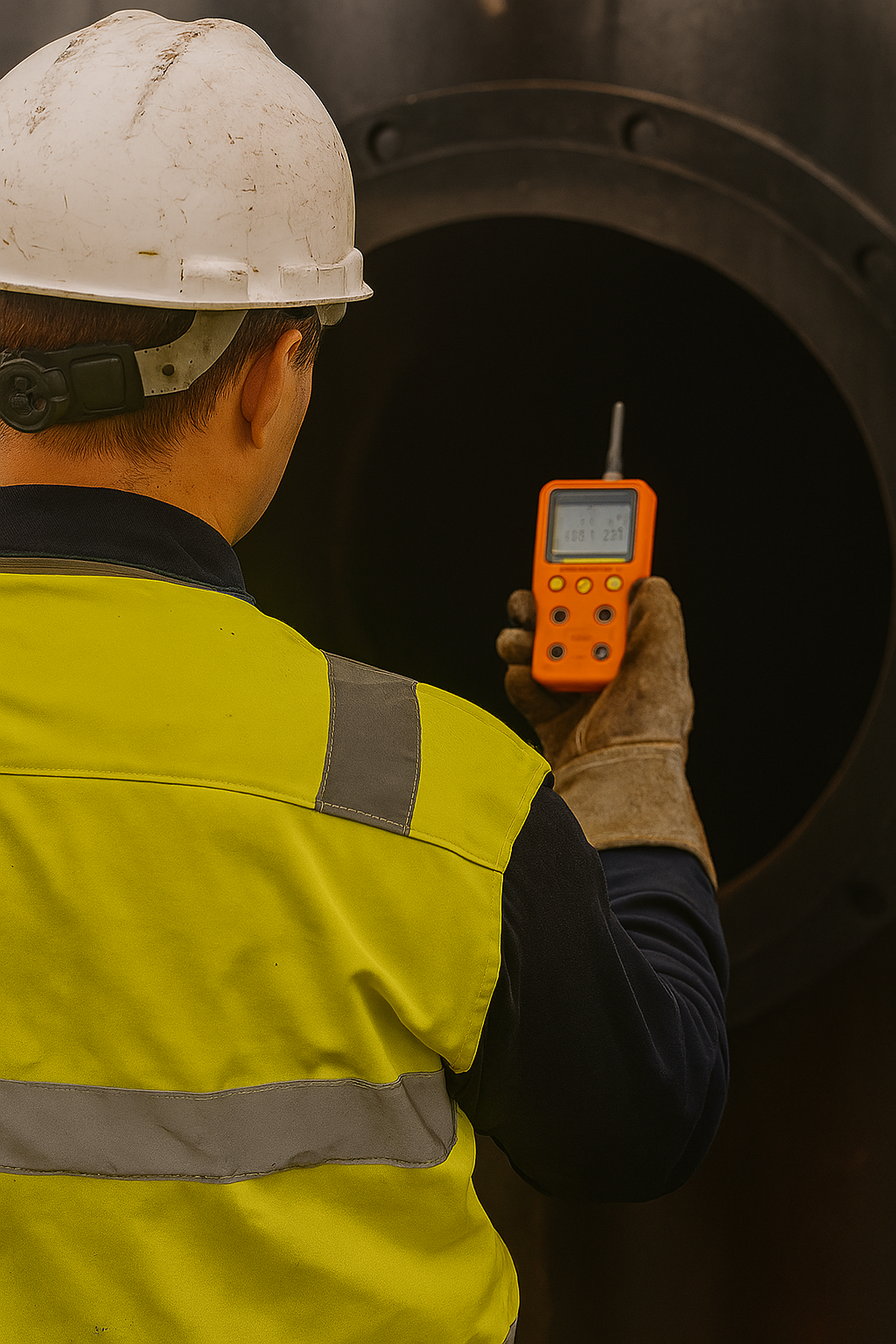
Confined Space Entry & Gas Testing
(RIIWHS202E & MSMWHS217)
Course Description
This course set is designed for new and experienced personnel required to work in confined spaces and carry out gas testing of an atmosphere prior to entering a specific area or workspace in the resources and infrastructure industries.
Participants will learn to distinguish what constitutes a confined space, understand key terminology, and apply the regulations and legislative requirements governing confined space entry. They will identify hazards and emergencies, implement control measures, conduct risk assessments, and apply for confined space entry permits.
Atmospheric testing is a critical component of confined space work. Participants will learn to test atmospheres that may contain visible or invisible hazards, interpret results, and take appropriate action.
Students will demonstrate safe entry, exit and work procedures for two confined space scenarios, select and inspect PPE, operate atmospheric testing equipment, and conduct routine servicing of equipment.
Units Delivered
The following units will be included in your certificate:
- MSMWHS217 – Gas test atmospheres
- RIIWHS202E – Enter and work in confined spaces
Course Delivery
This course can be delivered/assessed in the workplace or at a facility organised by the training provider.
Course Durations
Course durations can vary for multiple reasons, so the durations below are the minimum possible amount.
- Refresher: Minimum 5 hours face-to-face
- Face-to-Face: Minimum 9 hours
- Online with face-to-face assessment: Minimum 4 hours
Entry Requirements
- Psychological and physical capability to safely enter, work in, and exit confined spaces while wearing PPE. This may involve climbing, crawling, suspension, and working in dark, low‑light or smoke‑filled environments.
- Students must provide and wear protective footwear/safety shoes and practical clothing during practical sessions and assessment.
- Language, literacy and numeracy skills sufficient to interpret documentation, communicate clearly in English, complete workplace forms, and interpret gas test/monitoring results.
- Consideration should be given to physical ability, ability to work in restrictive spaces (e.g., claustrophobia), and ability to wear required PPE (e.g., respirators).
Assessment Requirements
Individuals undertaking this course set will be expected to complete both written and practical assessment tasks.
Certificate Renewal Requirements
The units have the following recommended renewal periods:
| Unit | Period |
|---|---|
| MSMWHS217 – Gas test atmospheres | Not applicable |
| RIIWHS202E – Enter and work in confined spaces | Not applicable |
Learner Rights, Responsibilities & Support
Enrolment in this course is made with Allens Training Pty Ltd RTO 90909. Please refer to the student handbook located on the RTO website (https://allenstraining.com.au/students/student-handbook) for all details relating to rights and responsibilities including complaints and appeals.
Assessment Activities
Practical scenarios:
- Perform a horizontal and vertical entry into a confined space
- Prepare for and test gas in a confined space or other potentially unsafe area
- Use and maintain testing and monitoring equipment
- Identify hazards and implement controls
- Interpret gas readings and take required action
- Follow communication and recording procedures
Documentation:
- Complete two JSEA/SWMS forms
- Apply for and obtain confined space entry permits (horizontal and vertical)
- Record gas testing results
Theory assessment:
A written exam consisting of multiple‑choice and short‑answer questions.
Core Skill Requirements
Students must complete a self‑evaluation against the following core skills as part of the enrolment process.
- Learning: I can follow safety procedures and apply what I’ve learned to work safely in confined spaces and test the air.
- Reading: I can read and understand permits, warning signs, safety instructions, and gas monitor displays.
- Writing: I can complete forms or short notes to report gas test results or safety actions.
- Oral Communication: I can speak clearly and listen carefully when checking instructions or sharing safety information with others.
- Numeracy: I can use numbers to read gas levels, follow timing steps, and check if conditions are safe to enter.
Please contact for pricing
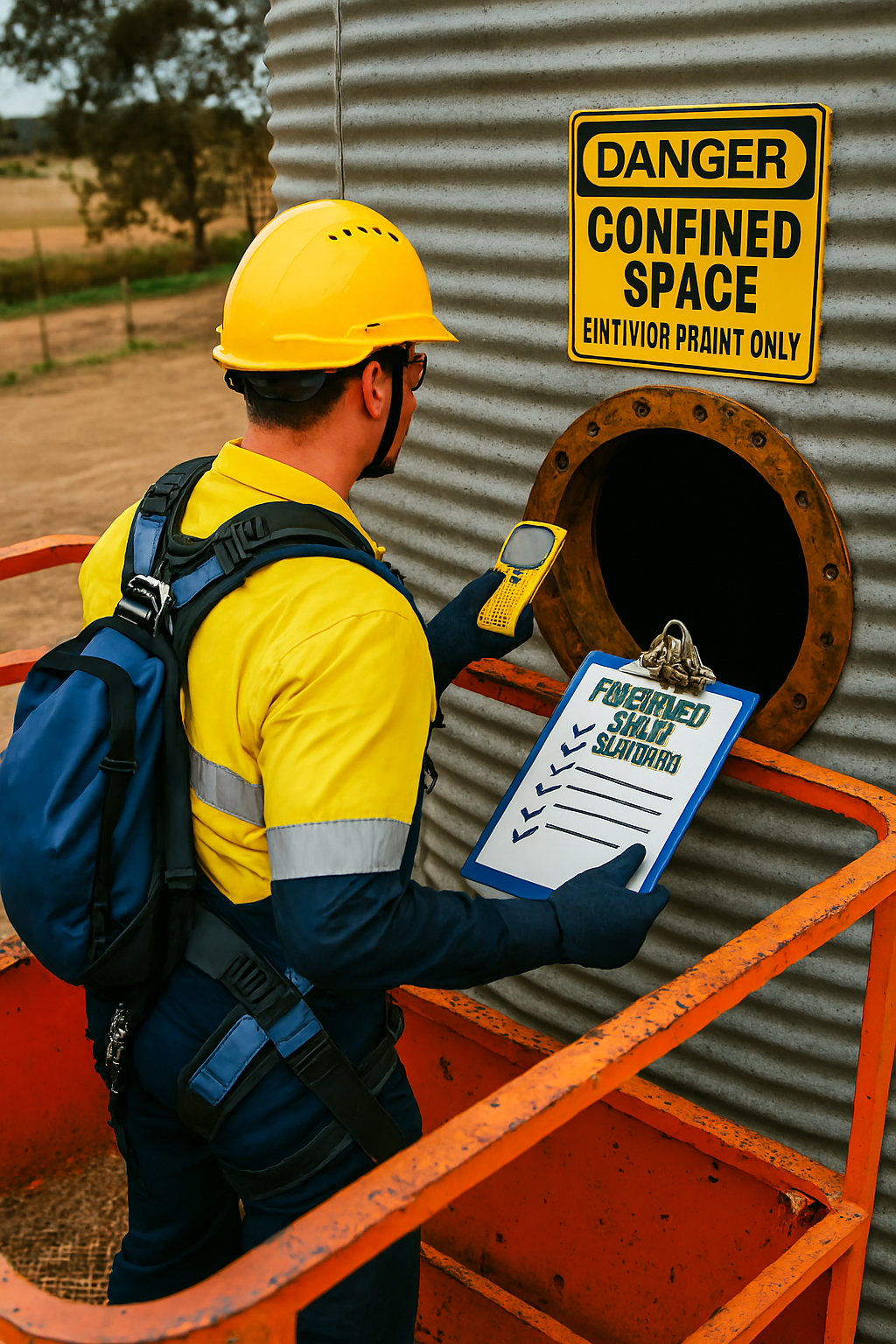
Confined Space Entry & Working at Heights
(RIIWHS202E & RIIWHS204E)
Course Description
This course set is designed for new and experienced personnel required to work in confined spaces and work safely at heights at an operational level in the resources and infrastructure industries. Many roles require both skillsets, including safety, maintenance, engineering, risk management, mining, cable installation and transport operations.
Participants will learn to distinguish what constitutes a confined space and what constitutes working at height, understand key terminology, and apply the legislative and regulatory requirements for both environments.
The course covers hazard identification, risk assessment, environmental considerations, and the implementation of appropriate control measures. Students will complete two risk assessments and apply for two confined space entry permits.
Students will perform two working‑at‑heights scenarios using various safety systems, including installing, fitting, adjusting and anchoring fall protection equipment. They will also demonstrate safe entry, exit and work procedures for confined spaces, operate atmospheric monitoring devices, and conduct routine servicing of equipment.
Units Delivered
The following units will be included in your certificate:
- RIIWHS202E – Enter and work in confined spaces
- RIIWHS204E – Work safely at heights
Course Delivery
This course can be delivered/assessed in the workplace or at a facility organised by the training provider.
Course Durations
Course durations can vary for multiple reasons, so the durations below are the minimum possible amount.
- Refresher: Minimum 7 hours face-to-face
- Face-to-Face: Minimum 12 hours
- Online with face-to-face assessment: Minimum 6 hours
Entry Requirements
- Psychological and physical capability to safely enter, work in, and exit confined spaces while wearing PPE. This may involve climbing, crawling, suspension, and working in dark, low‑light or smoke‑filled environments.
- Sufficient physical ability to lift up to 15 kg overhead and access heights above 2 metres.
- Students must provide and wear protective slip‑resistant footwear and practical clothing during practical sessions and assessment.
- Language, literacy and numeracy skills sufficient to interpret documentation, communicate clearly in English, complete workplace forms, and interpret gas test/monitoring results.
- Consideration should be given to physical ability, ability to work in restrictive spaces (e.g., claustrophobia), and ability to wear required PPE (e.g., respirators).
Assessment Requirements
Individuals undertaking this course set will be expected to complete both written and practical assessment tasks.
Certificate Renewal Requirements
The units have the following recommended renewal periods:
| Unit | Period |
|---|---|
| RIIWHS202E – Enter and work in confined spaces | Not applicable |
| RIIWHS204E – Work safely at heights | Not applicable |
Learner Rights, Responsibilities & Support
Enrolment in this course is made with Allens Training Pty Ltd RTO 90909. Please refer to the student handbook located on the RTO website (https://allenstraining.com.au/students/student-handbook) for all details relating to rights and responsibilities including complaints and appeals.
Assessment Activities
Performance tasks:
- Horizontal entry into a confined space
- Use atmospheric monitoring devices prior to entering the confined space
- Work at height on a brittle surface
- Work at height on a flat surface into a confined space
Documentation:
- Completion of two site‑based JSEA/SWMS forms
- Completion of two confined space entry permits
- Interpretation of JSEA/SWMS to verify appropriate control measures
Theory assessment:
A written assessment consisting of short‑answer and multiple‑choice questions.
Core Skill Requirements
Students must complete a self‑evaluation against the following core skills as part of the enrolment process:
- Learning: I can follow safety instructions, ask questions when unsure, and apply what I’ve learned to stay safe in high‑risk tasks.
- Reading: I can read and understand work forms, safety procedures, signs, and equipment instructions.
- Writing: I can complete checklists, permits, and simple reports clearly and accurately.
- Oral Communication: I can speak clearly with others to confirm instructions, report hazards, and work safely as part of a team.
- Numeracy: I can use numbers to measure distances, check pressure or time limits, and follow sequences in safety procedures.
Please contact for pricing
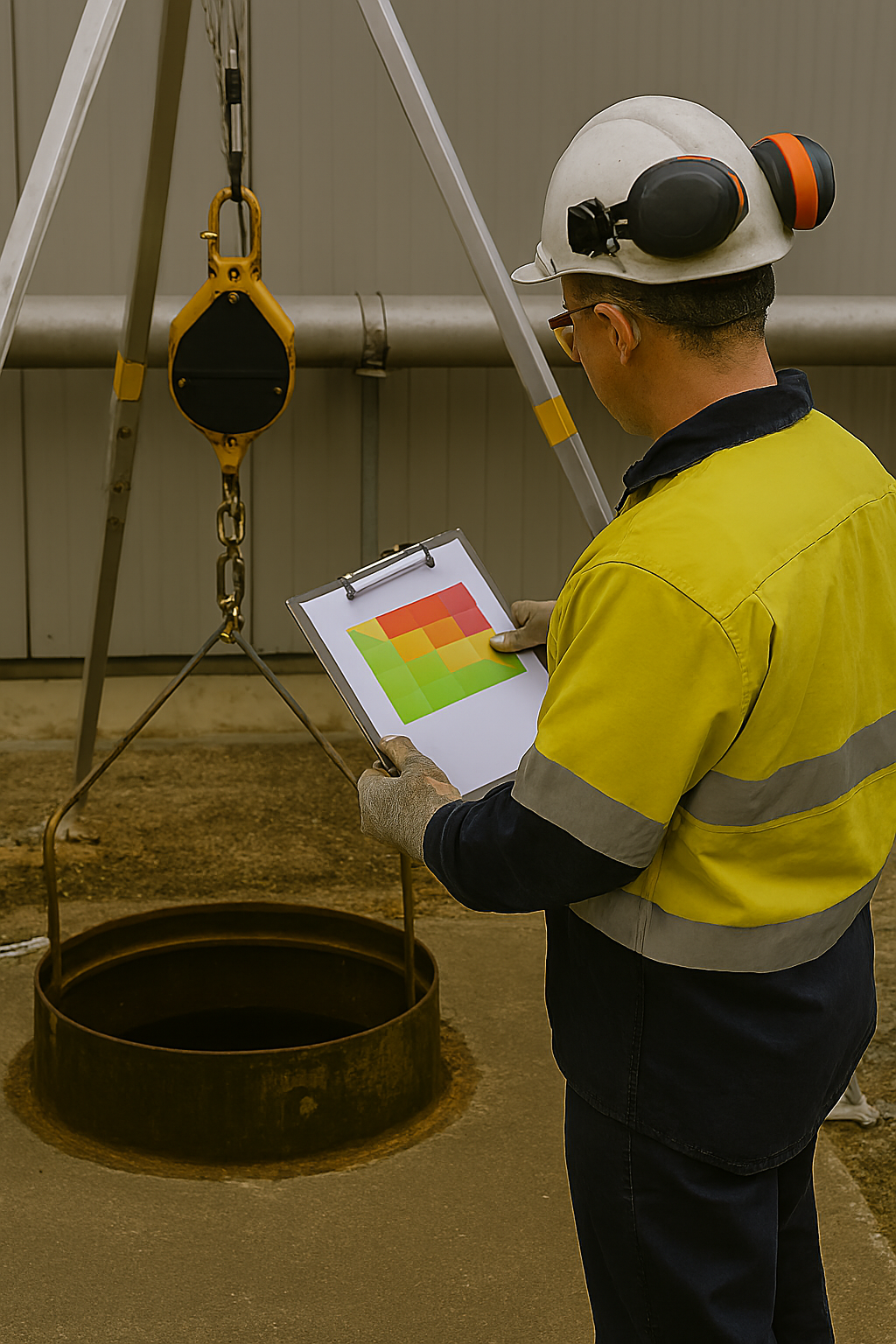
Confined Space Entry, Hazard Analysis & Work Permits
(RIIWHS202E, MSMWHS201 & MSMPER300)
Course Description
This course set is designed for personnel required to work in confined spaces, undertake atmospheric gas testing, conduct hazard analysis, and issue work permits in the resources and infrastructure industries. It is suitable for safety personnel, maintenance teams, engineers, risk managers, mine managers, cable installers, transport personnel, and safety observers.
Participants will learn to identify confined space hazards, understand key terminology, and apply legislative and regulatory requirements. They will conduct hazard analyses, implement control measures, and understand the strengths and limitations of permit systems.
This course also covers the skills required to issue work permits, including understanding permit limitations, determining the correct permit type, and ensuring safe worksite preparation.
Units Delivered
The following units will be included in your certificate:
- MSMPER300 – Issue work permits
- MSMWHS201 – Conduct hazard analysis
- RIIWHS202E – Enter and work in confined spaces
Course Delivery
This course can be delivered/assessed in the workplace or at a facility organised by the training provider.
Course Durations
Course durations can vary for multiple reasons, so the durations below are the minimum possible amount.
- Refresher: Minimum 7 hours face-to-face
- Face-to-Face: Minimum 11 hours
Entry Requirements
- MSMWHS201 Conduct hazard analysis is a pre‑requisite for MSMPER300 Issue work permits. This pre‑requisite is included in this course set.
- Psychological and physical capability to safely enter, work in, and exit confined spaces while wearing PPE. This may involve climbing, crawling, suspension, and working in dark, low‑light or smoke‑filled environments.
- Students must provide and wear protective footwear/safety shoes and practical clothing during practical sessions and assessment.
- Language, literacy and numeracy skills sufficient to interpret documentation, communicate clearly in English, complete workplace forms, and interpret gas test/monitoring results.
- Consideration should be given to physical ability, ability to work in restrictive spaces (e.g., claustrophobia), and ability to wear required PPE (e.g., respirators).
Assessment Requirements
Individuals undertaking this course will be expected to complete both written and practical assessment tasks.
Certificate Renewal Requirements
The units have the following recommended renewal periods:
| Unit | Period |
|---|---|
| MSMPER300 – Issue work permits | Not applicable |
| MSMWHS201 – Conduct hazard analysis | Not applicable |
| RIIWHS202E – Enter and work in confined spaces | Not applicable |
Learner Rights, Responsibilities & Support
Enrolment in this course is made with Allens Training Pty Ltd RTO 90909. Please refer to the student handbook located on the RTO website (https://allenstraining.com.au/students/student-handbook) for all details relating to rights and responsibilities including complaints and appeals.
Assessment Activities
Performance tasks:
- Perform a horizontal and a vertical entry into a confined space
- Complete a hazard analysis:
- Prepare for the hazard analysis
- Identify hazards
- Assess risks
- Control risks
- Review controls
- Identify and raise the required work permit
- Issue the permit and prepare for work
- Receive end‑of‑day report and close the permit
- Prepare the worksite:
- Mechanical, electrical or other energy isolations
- De‑energising energy/pressure sources
- Purging or ventilating plant
- Lockout/tagout procedures
- Blinding/blanking lines
- Other hazard controls
- Monitor work for compliance and respond to changing conditions
- Identify and act on non‑compliance
- Withdraw or cancel permit if required
- Provide end‑of‑day status report
- Demonstrate concluding operation techniques
Documentation:
- Complete two JSEA/SWMS forms
- Apply for and obtain confined space entry permits (horizontal and vertical)
- Record atmospheric testing results
- Close a work permit
Theory assessment:
A written assessment consisting of short‑answer and multiple‑choice questions.
Core Skill Requirements
Students must complete a self‑evaluation against the following core skills as part of the enrolment process:
- Learning: I can follow safety procedures, ask questions when unsure, and apply what I’ve learned to manage hazards and permit processes.
- Reading: I can read and understand work procedures, safety instructions, and permit conditions.
- Writing: I can fill out forms, checklists, and reports with clear and accurate safety information.
- Oral Communication: I can ask questions, report hazards, and give or receive clear instructions in person or by radio.
- Numeracy: I can use numbers, times, and dates to complete safety checks and issue or follow permits safely.
Please contact for pricing

Prepare to Work Safely in the Construction Industry (NSW)
(CPCWHS1001)
Course Description
A construction worker must complete general construction induction training (the “White Card”) before being permitted to commence work on a construction site. This requirement is mandatory across Australia.
This course is suitable for individuals who have never worked in the construction industry or those who have lost their White Card and need to obtain a new one.
The course introduces participants to current WHS legislative requirements, personal awareness, and the basic principles of risk management to prevent injury or harm to themselves and others.
It covers identifying and orally reporting common construction hazards, understanding basic risk control measures, responding to incidents and emergencies, and correctly selecting and fitting common PPE used in construction work.
Units Delivered
The following unit will be included in your certificate:
- CPCWHS1001 – Prepare to work safely in the construction industry
Course Delivery
This course can be delivered/assessed in the workplace or at a facility organised by the training provider.
Course Durations
Course durations can vary for multiple reasons, so the durations below are the minimum possible amount.
- Blended: Minimum 7 hours face-to-face
Entry Requirements
- Proof of age – must be 14 years or over.
- Valid working email address.
- Points of current and valid identification (including photographic ID). An Evidence of Identification (EOI) checklist will be provided on enrolment.
- Physical capacity to demonstrate correct donning and removing of PPE for assessment.
- This course must be delivered in New South Wales only.
Assessment Requirements
Individuals undertaking this course will be expected to complete written, oral, and practical assessment tasks.
Certificate Renewal Requirements
The unit has the following recommended renewal period:
| Unit | Period |
|---|---|
| CPCWHS1001 – Prepare to work safely in the construction industry | Not applicable |
Learner Rights, Responsibilities & Support
Enrolment in this course is made with Allens Training Pty Ltd RTO 90909. Please refer to the student handbook located on the RTO website ( https://allenstraining.com.au/students/student-handbook ) for all details relating to rights and responsibilities including complaints and appeals.
Assessment Activities
Assessment tasks include:
- Multiple‑choice and short‑answer written questions
- Short‑answer oral questions
-
Practical demonstration of correct fitting of PPE:
- Eye protection
- Hearing protection
- Hard hat
- High‑visibility retro‑reflective vest
- Dust mask
Core Skill Requirements
Students must complete a self‑evaluation against the following core skills as part of enrolment:
- Learning: I can follow instructions and ask questions to ensure I understand safety procedures.
- Reading: I can read short safety signs, labels, and simple written information about hazards.
- Writing: I can fill out basic forms and write simple information.
- Oral Communication: I can listen to safety information and speak clearly to share ideas or ask for help.
- Numeracy: I can understand simple numbers and measurements used in safety information.
Please contact for pricing
Work in Accordance with an Issued Permit
(MSMPER200)
Course Description
This course is designed for individuals who are required to conduct work activities under the authority of an issued permit to work. It applies to permit recipients or permit holders working alone or as part of a team, including maintenance staff, contractors, and anyone performing non‑process work on a plant.
Participants will learn the skills and knowledge required to work safely and effectively under a permit system. This includes understanding permit limitations, complying with permit conditions, and ensuring all requirements are met before, during, and after the permitted work.
Units Delivered
The following unit will be included in your certificate:
- MSMPER200 – Work in accordance with an issued permit
Course Delivery
This course can be delivered/assessed in the workplace or at a facility organised by the training provider.
Course Durations
Course durations can vary for multiple reasons, so the durations below are the minimum possible amount.
- Face‑to‑Face: Minimum 4 hours
Entry Requirements
- Physical capability to meet the demands of practical demonstrations, including wearing and working in all relevant PPE.
Assessment Requirements
Individuals undertaking this course will be expected to complete both written and practical assessment tasks.
Certificate Renewal Requirements
This certificate does not require renewal.
Learner Rights, Responsibilities & Support
Enrolment in this course is made with Allens Training Pty Ltd RTO 90909. Please refer to the student handbook located on the RTO website ( https://allenstraining.com.au/students/student-handbook ) for all details relating to rights and responsibilities including complaints and appeals.
Assessment Activities
Performance tasks:
- Prepare for work in accordance with an issued permit
- Select and use personal protective equipment (PPE)
- Obtain relevant information
- Apply for the permit
- Identify emergency and safety equipment
Practical scenarios:
- Work in accordance with an issued permit
Documentation:
- Completion of a site‑based Risk Assessment, JHA and SWMS form
- Completion of an Entry Permit
- Completion of an incident reporting form
Theory assessment:
A written exam consisting of multiple‑choice and short‑answer questions. All questions must be completed.
Core Skill Requirements
Students must complete a self‑evaluation against the following core skills as part of enrolment:
- Learning: I can learn and follow permit conditions to carry out tasks safely and within the rules.
- Reading: I can read and understand the details on a work permit, including safety instructions and conditions.
- Writing: I can fill in basic forms or checklists related to permits and write short notes if needed.
- Oral Communication: I can ask questions about the permit, confirm instructions, and talk to others to ensure safe work.
- Numeracy: I can use numbers to check times, permit limits, or measurements related to safe work.
Please contact for pricing
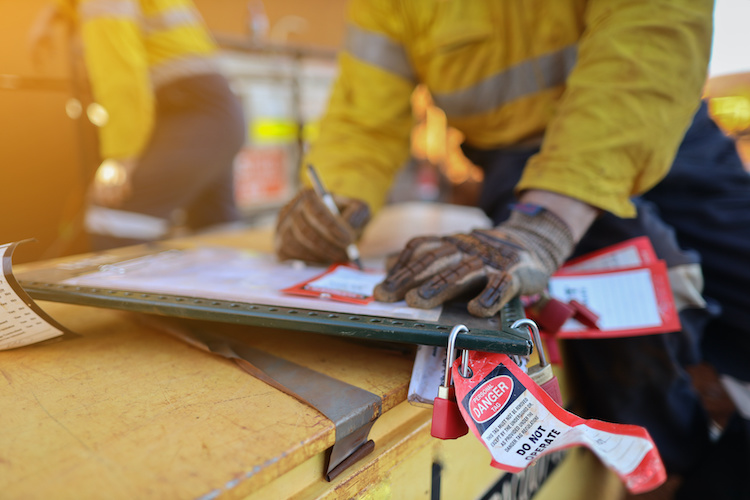
Issue Work Permits
(MSMPER300)
Course Description
This course is designed for individuals who are required to issue work permits for activities where hazards exist or specific procedures must be followed and monitored to protect personnel and plant integrity.
Whether working independently or in liaison with team members and control room operators, participants will learn to understand permit systems, permit limitations, and how to determine the correct permit for a task.
Units Delivered
The following unit will be included in your certificate:
- MSMPER300 – Issue work permits
Course Delivery
This course can be delivered/assessed in the workplace or at a facility organised by the training provider.
Course Durations
Course durations can vary for multiple reasons, so the durations below are the minimum possible amount.
- Face‑to‑Face: Minimum 4 hours
Entry Requirements
- Participants must hold the pre‑requisite unit MSMWHS201 Conduct hazard analysis.
- Physical capability to meet the demands of practical demonstrations, including wearing PPE, conducting hazard analysis, and performing tests/inspections for gas or other hazards.
Assessment Requirements
Individuals undertaking this course will be expected to complete both written and practical assessment tasks.
Certificate Renewal Requirements
This certificate does not require renewal.
Learner Rights, Responsibilities & Support
Enrolment in this course is made with Allens Training Pty Ltd RTO 90909. Please refer to the student handbook located on the RTO website ( https://allenstraining.com.au/students/student-handbook ) for all details relating to rights and responsibilities including complaints and appeals.
Assessment Activities
Practical scenarios:
- Identify and raise the required work permit
- Issue the permit and prepare for work
- Receive end‑of‑day report and close the permit
Theory assessment:
A written exam consisting of multiple‑choice and short‑answer questions. All questions must be completed.
Core Skill Requirements
Students must complete a self‑evaluation against the following core skills as part of enrolment:
- Learning: I can follow the correct steps when completing safety processes before approving work.
- Reading: I can read and understand written procedures, safety instructions, and permit conditions.
- Writing: I can clearly record names, times, and conditions on safety or approval forms.
- Oral Communication: I can speak clearly and ask questions to ensure everyone understands what must happen before, during, and after a task.
- Numeracy: I can use times, dates, and numbers to plan tasks and verify safety checks.
Please contact for pricing
Conduct Hazard Analysis
(MSMWHS201)
Course Description
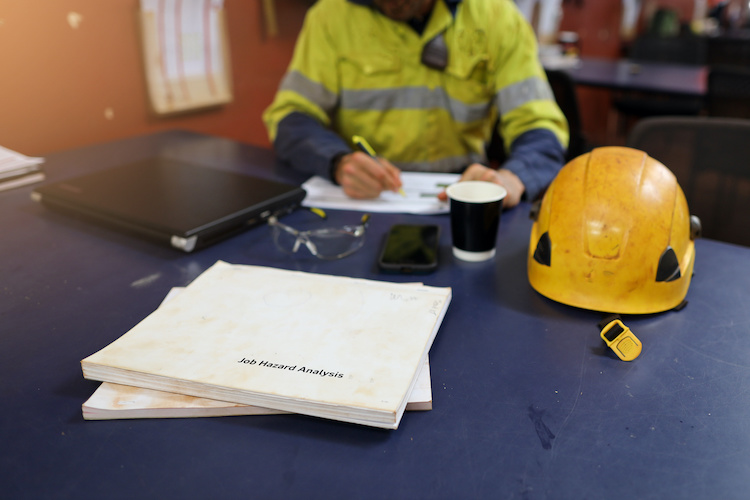
This course is designed for individuals who may be required to complete a hazard analysis as part of organisational procedures, a safety case, or general good practice. Hazard analysis may be conducted independently or as part of a broader process such as identifying and applying for required work permits.
Participants will learn the skills and knowledge required to identify hazards, specify risk controls to reduce risks to ALARP, identify relevant personnel, complete hazard analysis forms (paper or electronic), and monitor and review the effectiveness of risk controls.
The course also covers the significance of analysis context, how hazards may cause harm, and the purpose and use of a risk matrix.
Units Delivered
The following unit will be included in your certificate:
- MSMWHS201 – Conduct hazard analysis
Course Delivery
This course can be delivered/assessed in the workplace or at a facility organised by the training provider.
Course Durations
Course durations can vary for multiple reasons, so the durations below are the minimum possible amount.
- Face‑to‑Face: Minimum 4 hours
Entry Requirements
- Physical capability to meet the demands of practical demonstrations, including wearing and working in all relevant PPE.
Assessment Requirements
Individuals undertaking this course will be expected to complete both written and practical assessment tasks.
Certificate Renewal Requirements
This certificate does not require renewal.
Learner Rights, Responsibilities & Support
Enrolment in this course is made with Allens Training Pty Ltd RTO 90909. Please refer to the student handbook located on the RTO website ( https://allenstraining.com.au/students/student-handbook ) for all details relating to rights and responsibilities including complaints and appeals.
Assessment Activities
Performance tasks:
- Conduct a hazard analysis
Documentation:
- Completion of a Hazard Analysis form
Theory assessment:
A written exam consisting of multiple‑choice and short‑answer questions. All questions must be completed.
Core Skill Requirements
Students must complete a self‑evaluation against the following core skills as part of enrolment:
- Learning: I can follow safety procedures and apply what I’ve learned to help identify and reduce risks at work.
- Reading: I can read and understand safety signs, risk assessment forms, and written procedures.
- Writing: I can record information clearly on hazard reports, checklists, or other simple workplace forms.
- Oral Communication: I can ask questions, report hazards, and discuss risks clearly with team members or supervisors.
- Numeracy: I can use numbers or simple scales to estimate risks or follow steps in hazard control procedures.
Please contact for pricing
Operate Breathing Apparatus
(MSMWHS216)
Course Description
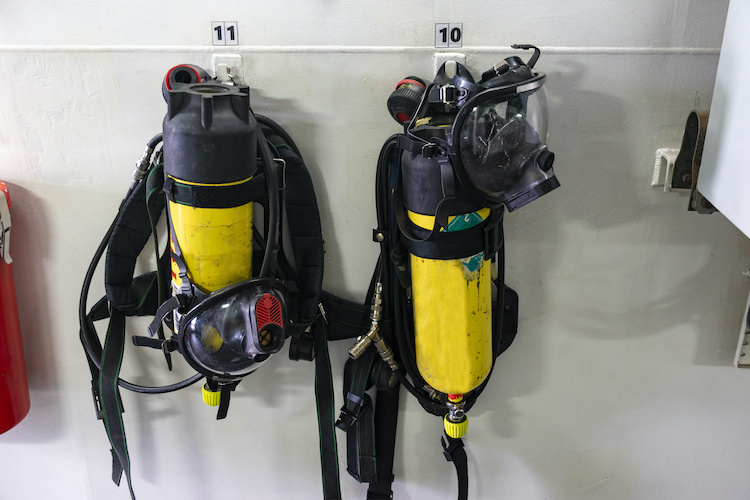
This nationally recognised course provides participants with the skills and knowledge to safely operate breathing apparatus (BA) in irrespirable, hazardous or oxygen‑deficient atmospheres. It covers self‑contained breathing apparatus (SCBA), airline equipment and other open‑circuit systems, but does not include rebreather (closed‑circuit) apparatus.
Designed for workers who may be required to wear BA as part of their duties—such as those working in confined spaces, with hazardous gases or vapours, or where oxygen levels may be compromised—the course develops practical competence across realistic scenarios, including operating BA under adverse conditions such as an entrapment situation.
Participants learn to inspect and test equipment, don and operate BA safely, identify and control hazards, communicate effectively, respond to emergencies, and complete post‑use maintenance and reporting.
Training and assessment align with AS/NZS ISO 16975.3:2023, AS/NZS 1715, and relevant WHS/OHS regulations to ensure safe and effective performance in high‑risk environments.
Units Delivered
The following unit will be included in your certificate:
- MSMWHS216 – Operate breathing apparatus
Course Delivery
This course can be delivered/assessed in the workplace or at a facility organised by the training provider.
Course Durations
Course durations can vary for multiple reasons, so the durations below are the minimum possible amount.
- Refresher: Minimum 4 hours face‑to‑face
- Face‑to‑Face: Minimum 8 hours
Entry Requirements
- An official form of photo identification (e.g., driver’s licence, passport, student ID).
- Participants must be clean shaven in accordance with AS/NZS ISO 16975.3 and AS/NZS 1715:2009. Facial hair within the sealing area compromises respirator effectiveness.
- Protective footwear/safety shoes and practical clothing must be provided by the student and worn during practical sessions and assessment.
- Psychological and physical capability to meet the demands of the course, including donning, operating and removing SCBA (up to 15 kg), working in confined or low‑visibility environments, crawling, kneeling, climbing, carrying equipment, and completing a controlled entrapment exercise.
Assessment Requirements
Individuals undertaking this course will be expected to complete both written and practical assessment tasks.
Certificate Renewal Requirements
This certificate does not require renewal.
Learner Rights, Responsibilities & Support
Enrolment in this course is made with Allens Training Pty Ltd RTO 90909. Please refer to the student handbook located on the RTO website ( https://allenstraining.com.au/students/student-handbook ) for all details relating to rights and responsibilities including complaints and appeals.
Assessment Activities
Performance tasks:
- Conduct pre‑donning checks, tests and concluding operations for breathing apparatus
- Operate BA in a hazardous atmosphere
- Operate BA under adverse conditions
- Complete an equipment fault log
Documentation:
- Completion of an Equipment Fault Log
Theory assessment:
A written assessment consisting of short‑answer and multiple‑choice questions. All questions must be completed.
Core Skill Requirements
Students must complete a self‑evaluation against the following core skills as part of enrolment:
- Learning: I can follow detailed safety procedures to use breathing equipment correctly in hazardous environments.
- Reading: I can read and understand equipment manuals, warning signs, and instructions for using breathing apparatus safely.
- Writing: I can complete logs, checklists, and reports accurately when using or inspecting breathing apparatus.
- Oral Communication: I can speak clearly with team members and supervisors to give or receive safety instructions and updates.
- Numeracy: I can use numbers to check air pressure, time remaining, or other settings on breathing equipment.
Please contact for pricing
Gas Test Atmospheres
(MSMWHS217)
Course Description
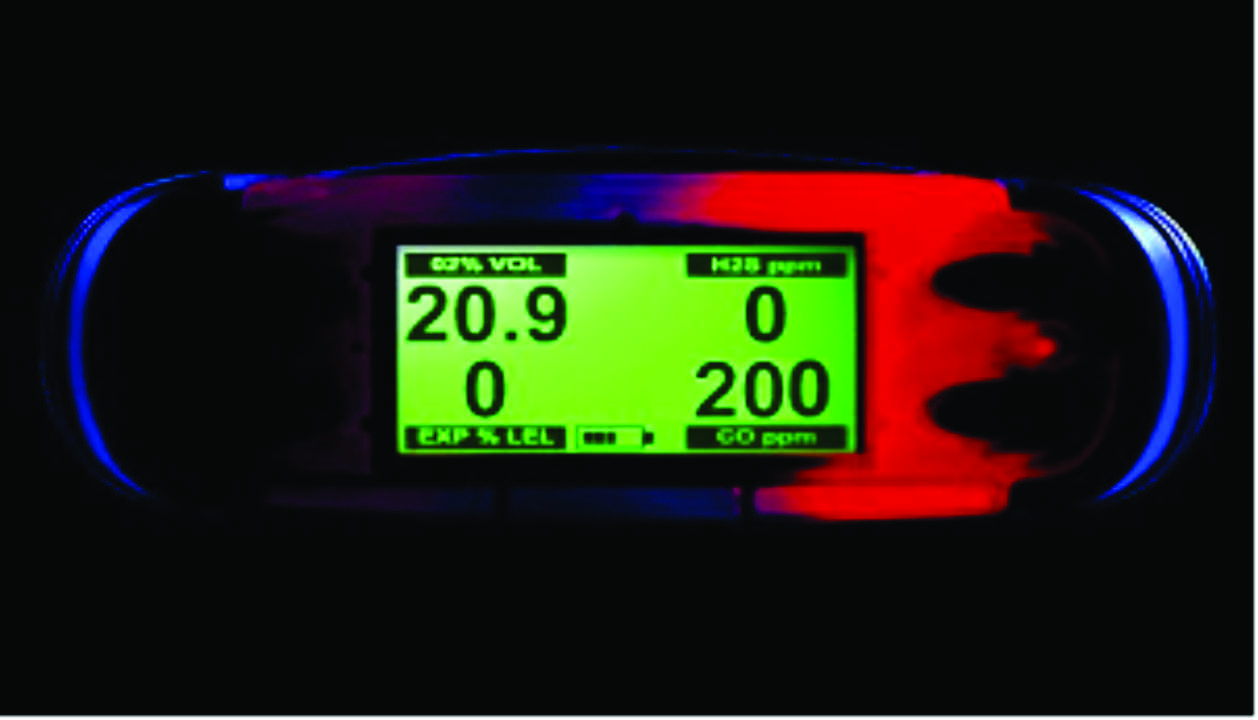
This unit covers the skills and knowledge required to recognise and assess conditions that require gas testing, test the working atmosphere using electronic gas detection equipment, and interpret results to determine whether it is safe for the proposed job activity.
Gas testing may be required before entering a workspace and while work is being carried out. Atmospheric testing is a critical component of confined space work, where environments may be hazardous, unpredictable, time‑pressured, chaotic, and expose responders to significant risk.
Situations requiring gas testing include:
- Confined spaces
- Enclosed or partially enclosed spaces
- Hot work
- Storage tanks, silos, pits, pipes, shafts, ducts, transport vehicles and ships
- Testing as part of issuing a work permit
- Monitoring while working under a permit
- Open areas
- Hand‑held gas testing
- Lowering a gas tester into a space (e.g., on a line)
Units Delivered
The following unit will be included in your certificate:
- MSMWHS217 – Gas test atmospheres
Course Delivery
This course can be delivered/assessed in the workplace or at a facility organised by the training provider.
Course Durations
Course durations can vary for multiple reasons, so the durations below are the minimum possible amount.
- Refresher: Minimum 2 hours 30 minutes face‑to‑face
- Face‑to‑Face: Minimum 4 hours
- Online with face‑to‑face assessment: Minimum 2 hours
Entry Requirements
- Protective footwear/safety shoes and practical clothing must be provided by the student and worn during practical sessions and assessment.
- Language, literacy and numeracy skills sufficient to interpret documentation, communicate clearly in English, complete workplace forms, and interpret gas test/monitoring results.
Assessment Requirements
Individuals undertaking this course will be expected to complete both written and practical assessment tasks.
Certificate Renewal Requirements
This certificate does not require renewal.
Learner Rights, Responsibilities & Support
Enrolment in this course is made with Allens Training Pty Ltd RTO 90909. Please refer to the student handbook located on the RTO website ( https://allenstraining.com.au/students/student-handbook ) for all details relating to rights and responsibilities including complaints and appeals.
Assessment Activities
Practical scenarios (Confined Space context):
- Prepare for testing
- Test gas
- Interpret readings
- Monitor gas on an ongoing basis
- Communicate required actions based on interpretation
- Maintain equipment
- Maintain records of tests and results
Documentation:
- Completion of site‑based gas test report forms
Theory assessment:
A written assessment consisting of short‑answer and multiple‑choice questions. All questions must be completed.
Core Skill Requirements
Students must complete a self‑evaluation against the following core skills as part of enrolment:
- Learning: I can follow steps to check if a site is safe before entering, especially when air quality may be a risk.
- Reading: I can read and interpret safety instructions, warning labels, and equipment displays.
- Writing: I can write short notes or complete records about air testing.
- Oral Communication: I can relay information, explain results, and ask questions if unsure about safety.
- Numeracy: I can use numbers to read gas monitor levels and determine if results are safe or require action.
Please contact for pricing
Operate Breathing Apparatus (Open Circuit)
(PUAFIR207)
Course Description
This course is designed for individuals required to wear breathing apparatus in hazardous atmospheres, typically within the fire sector. It covers working in a range of hazardous environments and managing situations such as air‑supply exhaustion, entrapment, and equipment malfunction as part of a team.
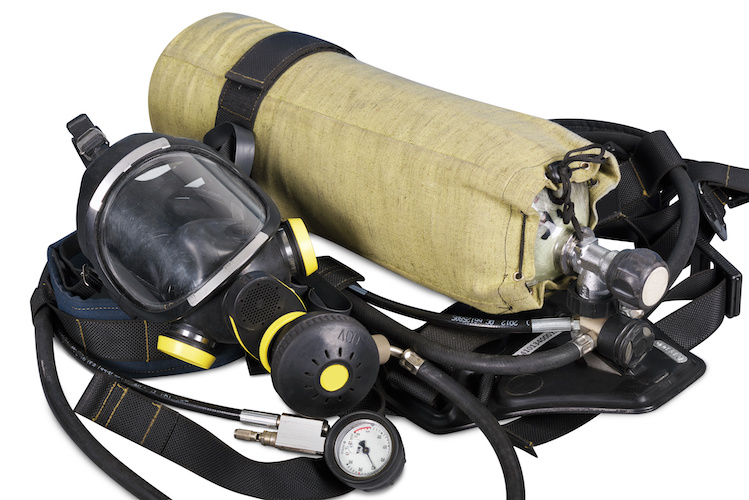
Participants will learn to select, inspect, test, operate and maintain open‑circuit breathing apparatus in accordance with AS/NZS 1715:2009. The course also covers concluding operations and reporting requirements.
Students undertaking fire‑sector training or RII30719 Certificate III in Emergency Response and Rescue must hold the pre‑requisite unit PUAFIR210 Prevent injury.
Units Delivered
The following unit will be included in your certificate:
- PUAFIR207 – Operate breathing apparatus open circuit
Course Delivery
This course can be delivered/assessed in the workplace or at a facility organised by the training provider.
Course Durations
Course durations can vary for multiple reasons, so the durations below are the minimum possible amount.
- Refresher: Minimum 9 hours face‑to‑face
- Face‑to‑Face: Minimum 20 hours
Entry Requirements
- Must hold the pre‑requisite unit PUAFIR210 Prevent injury (for fire‑sector training and RII30719 Certificate III in Emergency Response and Rescue).
- Participants must be clean shaven in accordance with AS/NZS 1715:2009. Facial hair within the sealing area compromises respirator effectiveness.
- Literacy and numeracy skills sufficient to read testing equipment and determine available working time from a BA set.
- Physical capability to wear and operate breathing apparatus and associated equipment in a range of hazardous conditions.
Assessment Requirements
Individuals undertaking this course will be expected to complete both written and practical assessment tasks.
Certificate Renewal Requirements
This certificate does not require renewal.
Learner Rights, Responsibilities & Support
Enrolment in this course is made with Allens Training Pty Ltd RTO 90909. Please refer to the student handbook located on the RTO website ( https://allenstraining.com.au/students/student-handbook ) for all details relating to rights and responsibilities including complaints and appeals.
Assessment Activities
Performance tasks and practical scenarios:
- Pre‑donning checks, test procedures and fault reporting
- Concluding operation techniques
- Confined space reduced‑visibility work
- Operate BA in adverse conditions
Documentation:
- Completion of an Equipment Fault Log
- Label breathing apparatus components
Theory assessment:
A written assessment consisting of multiple‑choice and short‑answer questions. All questions must be completed.
Core Skill Requirements
Students must complete a self‑evaluation against the following core skills as part of enrolment:
- Learning: I can follow detailed safety procedures to use breathing equipment correctly in hazardous situations.
- Reading: I can read and understand safety instructions, operating manuals, and warning signs.
- Writing: I can complete checklists, logs, and reports accurately.
- Oral Communication: I can give and receive clear spoken instructions and updates in a team environment.
- Numeracy: I can monitor time, pressure gauges, and calculations to ensure safe BA use.
Please contact for pricing
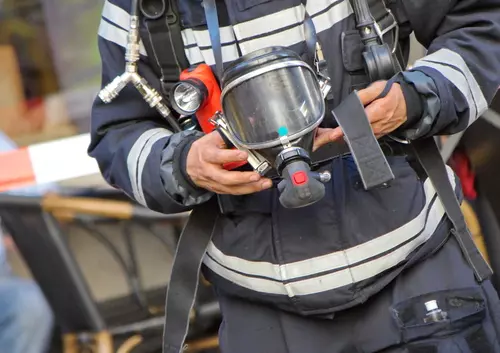
Operate Breathing Apparatus (Open Circuit) — Non‑Fire Sector
(PUAFIR207)
Course Description
This course is designed specifically for the non‑fire sector and is intended for individuals required to wear breathing apparatus in hazardous atmospheres. It covers working in a variety of hazardous environments and managing situations such as air‑supply exhaustion, entrapment, and equipment malfunction as part of a team.
Participants will learn to select, inspect, test, operate and maintain open‑circuit breathing apparatus in accordance with AS/NZS 1715:2009. The course also covers concluding operations and reporting requirements.
Units Delivered
The following unit will be included in your certificate:
- PUAFIR207 – Operate breathing apparatus open circuit
Course Delivery
This course can be delivered/assessed in the workplace or at a facility organised by the training provider.
Course Durations
Course durations can vary for multiple reasons, so the durations below are the minimum possible amount.
- Refresher: Minimum 9 hours face‑to‑face
- Face‑to‑Face: Minimum 20 hours
Entry Requirements
- Participants must be clean shaven in accordance with AS/NZS 1715:2009. Facial hair within the sealing area compromises respirator effectiveness.
- Literacy and numeracy skills sufficient to read testing equipment and determine available working time from a BA set.
- Physical capability to wear and operate breathing apparatus and associated equipment in a range of hazardous conditions.
Assessment Requirements
Individuals undertaking this course will be expected to complete both written and practical assessment tasks.
Certificate Renewal Requirements
The unit has the following recommended renewal period:
| Unit | Period |
|---|---|
| PUAFIR207 – Operate breathing apparatus open circuit | Not applicable |
Learner Rights, Responsibilities & Support
Enrolment in this course is made with Allens Training Pty Ltd RTO 90909. Please refer to the student handbook located on the RTO website ( https://allenstraining.com.au/students/student-handbook ) for all details relating to rights and responsibilities including complaints and appeals.
Assessment Activities
Performance tasks and practical scenarios:
- Pre‑donning checks, test procedures and fault reporting
- Concluding operation techniques
- Confined space reduced‑visibility work
- Operate BA in adverse conditions
Documentation:
- Completion of an Equipment Fault Log
- Label breathing apparatus components
Theory assessment:
A written assessment consisting of multiple‑choice and short‑answer questions. All questions must be completed.
Core Skill Requirements
Students must complete a self‑evaluation against the following core skills as part of enrolment:
- Learning: I can learn how to use new equipment by following instructions and practising until I get it right.
- Reading: I can read and understand safety instructions, warning labels, and equipment checklists.
- Writing: I can write short notes or complete simple forms to record equipment checks or report issues.
- Oral Communication: I can listen carefully to instructions and speak clearly with others to ensure safe equipment use.
- Numeracy: I can use numbers to check air pressure, monitor time remaining, and ensure safe equipment operation.
Please contact for pricing
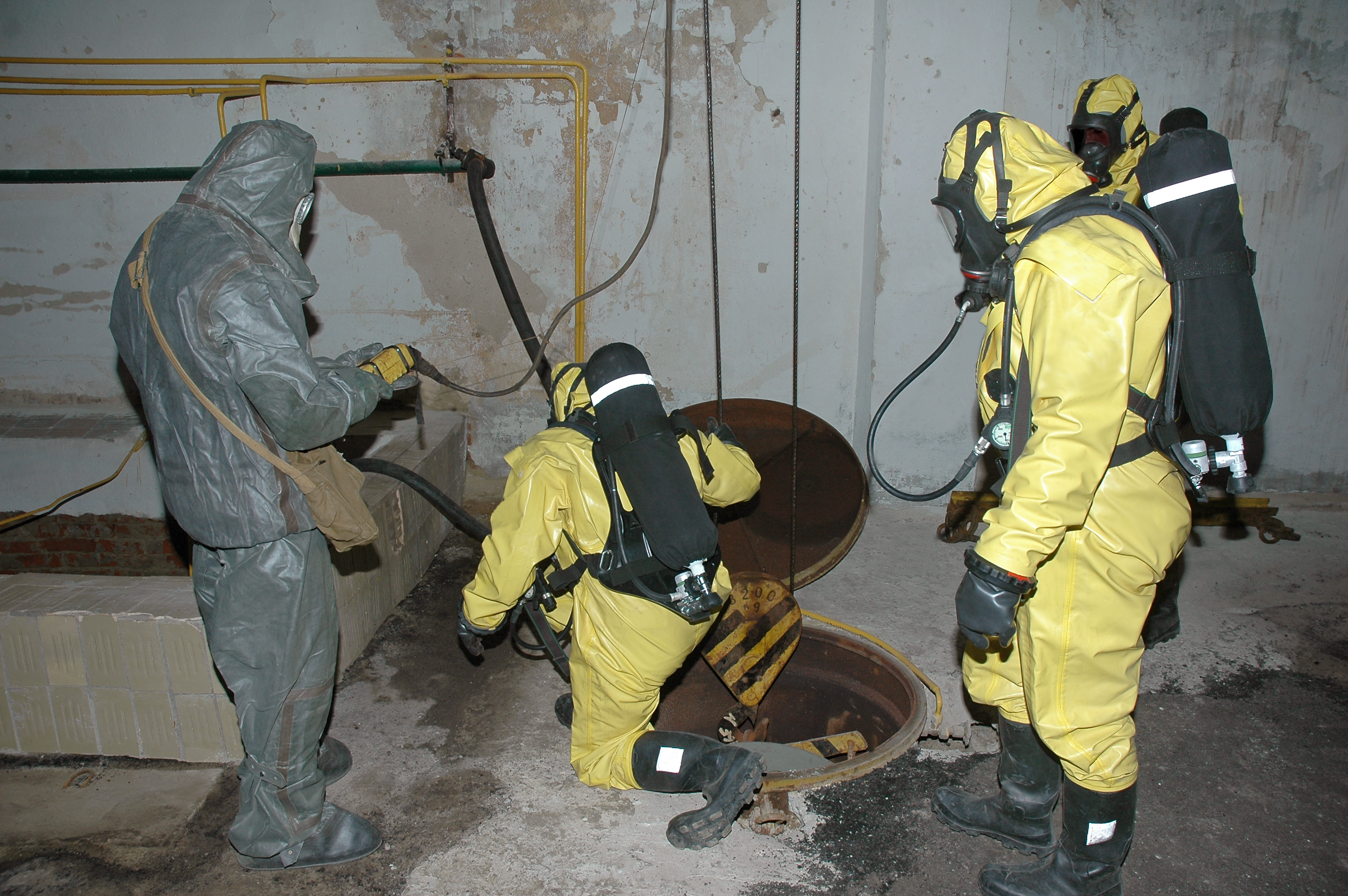
Undertake Confined Space Rescue
(PUASAR025)
Course Description
This course provides learners with hands‑on experience in realistic confined space rescue operations across a range of scenarios. A confined space is defined by the hazards present, not simply by its size.
The unit covers the skills and knowledge required to undertake rescues in confined spaces as part of a single organisation or multi‑agency team. It applies to emergency services personnel, volunteer organisations, and workers in industries where confined space entry is performed.
Participants will learn to operate a range of rescue equipment and apply safe techniques for extracting injured or ill persons from confined spaces, in accordance with Commonwealth and State/Territory legislation, Australian/New Zealand standards, and industry codes of practice.
Individuals within the fire sector, or those completing this unit toward a fire qualification, must hold the pre‑requisite units PUAFIR306 and PUASAR022.
Units Delivered
The following unit will be included in your certificate:
- PUASAR025 – Undertake confined space rescue
Course Delivery
This course can be delivered/assessed in the workplace or at a facility organised by the training provider.
Course Durations
Course durations can vary for multiple reasons, so the durations below are the minimum possible amount.
- Refresher: Minimum 6 hours face‑to‑face
- Face‑to‑Face: Minimum 10 hours
Entry Requirements
- Participants must be clean shaven to ensure an effective respirator seal (AS 1715).
- Psychological and physical capability to safely enter, work in, and exit confined spaces wearing PPE. This includes climbing, crawling, lifting 15 kg overhead, working at heights above 2 m, and operating in dark, low‑visibility or smoke‑filled environments.
- Sufficient fitness to ascend ropes, hang in harnesses, and climb structures under one’s own strength.
- Protective non‑slip footwear and practical clothing must be supplied and worn by the student.
- Language, literacy and numeracy skills sufficient to interpret documentation, communicate clearly, complete reports, and interpret gas test/monitoring results.
- Fire‑sector participants must hold PUAFIR306 and PUASAR022.
Assessment Requirements
Individuals undertaking this course will be expected to complete both written and practical assessment tasks.
Certificate Renewal Requirements
This certificate does not require renewal.
Learner Rights, Responsibilities & Support
Enrolment in this course is made with Allens Training Pty Ltd RTO 90909. Please refer to the student handbook located on the RTO website ( https://allenstraining.com.au/students/student-handbook ) for all details relating to rights and responsibilities including complaints and appeals.
Assessment Activities
Simulated rescue scenarios (two required):
- Identify unacceptable risk using acceptability/unacceptability criteria
- Work with others to determine risk controls
- Assess and determine consequences and likelihood of potential risks
- Select and implement appropriate risk controls
- Complete reports and records for risk assessment and treatment
- Monitor and minimise personal exposure to hazards
During the above, candidates must:
- Locate and apply relevant documentation, policies and procedures
- Implement local risk control procedures and techniques
- Undertake confined space rescue effectively with others
- Communicate clearly to coordinate rescue activities
- Complete tasks in line with legislation, codes of practice and workplace procedures
Theory assessment:
A written assessment consisting of multiple‑choice and short‑answer questions. All questions must be completed.
Core Skill Requirements
Students must complete a self‑evaluation against the following core skills as part of enrolment:
- Learning: I can follow instructions, ask questions when unsure, and take steps to keep myself and others safe.
- Reading: I can read and follow instructions, warning signs, and diagrams for managing confined spaces.
- Writing: I can write clear notes or reports about actions taken and safety issues observed.
- Oral Communication: I can speak clearly and calmly to give or receive instructions during a rescue.
- Numeracy: I can use numbers to measure time, space, or air levels to support safe decision‑making.
Please contact for pricing
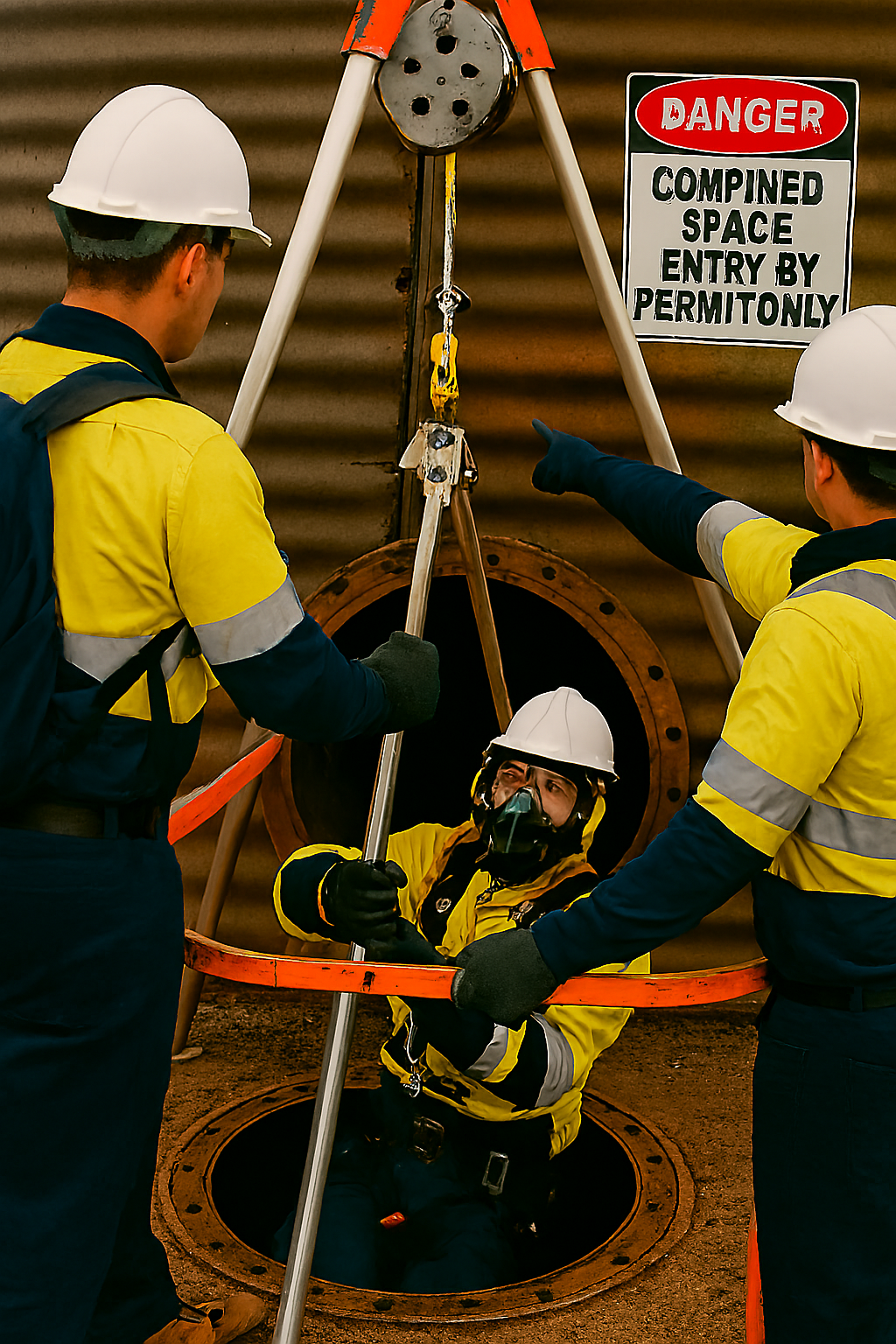
Undertake Confined Space Rescue (Non‑Fire Sector)
(PUASAR025)
Course Description
This course is designed for the non‑fire sector and tailored to learners with existing experience in confined space entry, gas testing, and breathing apparatus. It assumes a baseline level of competency and focuses on developing advanced rescue capability.
Participants will learn to undertake rescues in confined spaces as part of a single organisation or multi‑agency team. The course covers hazard identification, risk control, rescue planning, and safe casualty extrication while minimising harm to the casualty, the rescuer, and others.
Training aligns with relevant legislation, Australian/New Zealand standards, and industry codes of practice.
Units Delivered
The following unit will be included in your certificate:
- PUASAR025 – Undertake confined space rescue
Course Delivery
This course can be delivered/assessed in the workplace or at a facility organised by the training provider.
Course Durations
Course durations can vary for multiple reasons, so the durations below are the minimum possible amount.
- Refresher: Minimum 6 hours face‑to‑face
- Face‑to‑Face: Minimum 10 hours
Entry Requirements
- Participants must be clean shaven to ensure an effective respirator seal (AS 1715).
- No formal pre‑requisites for non‑fire sector participants, however it is strongly recommended that learners have current experience in confined space entry, breathing apparatus use, and hold a current first aid certificate.
- Psychological and physical capability to safely enter, work in, and exit confined spaces wearing PPE. This includes climbing, crawling, lifting 15 kg overhead, working at heights above 2 m, and operating in dark, low‑visibility or smoke‑filled environments.
- Sufficient fitness to ascend ropes, hang in harnesses, and climb structures under one’s own strength.
- Protective non‑slip footwear and practical clothing must be supplied and worn by the student.
- Language, literacy and numeracy skills sufficient to interpret documentation, communicate clearly, complete reports, and interpret gas test/monitoring results.
Assessment Requirements
Individuals undertaking this course will be expected to complete both written and practical assessment tasks.
Certificate Renewal Requirements
The unit has the following recommended renewal period:
| Unit | Period |
|---|---|
| PUASAR025 – Undertake confined space rescue | Not applicable |
Learner Rights, Responsibilities & Support
Enrolment in this course is made with Allens Training Pty Ltd RTO 90909. Please refer to the student handbook located on the RTO website ( https://allenstraining.com.au/students/student-handbook ) for all details relating to rights and responsibilities including complaints and appeals.
Assessment Activities
Simulated rescue scenarios (two required):
- Identify unacceptable risk using acceptability/unacceptability criteria
- Work with others to determine risk controls
- Assess and determine consequences and likelihood of potential risks
- Select and implement appropriate risk controls
- Complete reports and records for risk assessment and treatment
- Monitor and minimise personal exposure to hazards
During the above, candidates must:
- Locate and apply relevant documentation, policies and procedures
- Implement local risk control procedures and techniques
- Undertake confined space rescue effectively with others
- Communicate clearly to coordinate rescue activities
- Complete tasks in line with legislation, codes of practice and workplace procedures
Theory assessment:
A written assessment consisting of multiple‑choice and short‑answer questions. All questions must be completed.
Core Skill Requirements
Students must complete a self‑evaluation against the following core skills as part of enrolment:
- Learning: I can follow clear instructions, ask questions when unsure, and take steps to keep myself and others safe.
- Reading: I can read and interpret instructions, warning signs, and diagrams for managing confined spaces.
- Writing: I can write clear notes or reports about actions taken and safety issues observed.
- Oral Communication: I can speak clearly and calmly to give or receive instructions during a rescue.
- Numeracy: I can use numbers to measure time, space, or air levels to support safe decision‑making.
Please contact for pricing
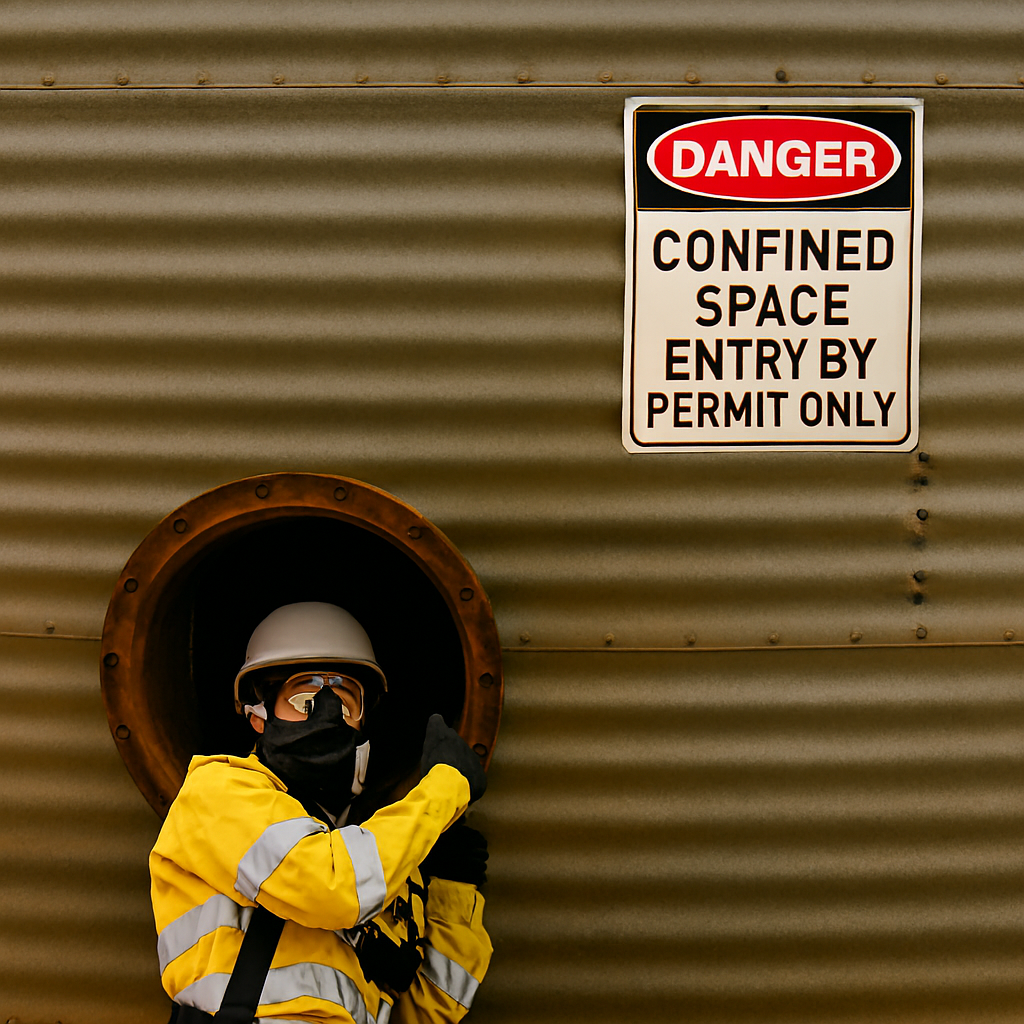
Enter and Work in Confined Spaces
(RIIWHS202E)
Course Description
This course is designed for new and experienced personnel required to work in confined spaces in the resources and infrastructure industries. Confined space training is essential for safety, injury prevention, maintenance personnel, engineers, risk managers, mine managers, cable installers, and transport personnel.
Participants will learn to identify what constitutes a confined space, understand key terminology, and apply relevant regulations and legislative requirements. The course covers hazard identification, emergency recognition, risk control measures, conducting risk assessments, and applying for confined space entry permits.
Students will demonstrate safe entry, exit, and work practices in confined spaces under permit conditions for two scenarios. They will also inspect and select PPE, operate atmospheric testing and monitoring devices, and conduct routine servicing of equipment.
Units Delivered
The following unit will be included in your certificate:
- RIIWHS202E – Enter and work in confined spaces
Course Delivery
This course can be delivered/assessed in the workplace or at a facility organised by the training provider.
Course Durations
Course durations can vary for multiple reasons, so the durations below are the minimum possible amount.
- Refresher: Minimum 4 hours face‑to‑face
- Face‑to‑Face: Minimum 7 hours
- Online with face‑to‑face assessment: Minimum 3 hours
Entry Requirements
- Psychological and physical capability to safely enter, work in, and exit confined spaces wearing PPE. This may involve climbing, crawling, lifting, working in low‑visibility or smoke‑filled areas, and temporary suspension in harnesses.
- Protective footwear/safety shoes and practical clothing must be supplied and worn by the student.
- Language, literacy and numeracy skills sufficient to interpret documentation, communicate clearly, complete reports, and interpret gas test/monitoring results.
Assessment Requirements
Individuals undertaking this course will be expected to complete both written and practical assessment tasks.
Certificate Renewal Requirements
This certificate does not require renewal.
Learner Rights, Responsibilities & Support
Enrolment in this course is made with Allens Training Pty Ltd RTO 90909. Please refer to the student handbook located on the RTO website ( https://allenstraining.com.au/students/student-handbook ) for all details relating to rights and responsibilities including complaints and appeals.
Assessment Activities
Performance tasks:
- Perform a horizontal and a vertical entry into a confined space
- Use atmospheric monitoring devices prior to entry
- Apply tagging and lock‑out procedures
- Follow communication and recording procedures
Documentation:
- Complete two JSEA/SWMS forms
- Apply for and obtain confined space entry permits for both scenarios
Theory assessment:
A written assessment consisting of short‑answer and multiple‑choice questions. All questions must be completed.
Core Skill Requirements
Students must complete a self‑evaluation against the following core skills as part of enrolment:
- Learning: I can follow clear instructions and ask questions when unsure.
- Reading: I can read and understand workplace procedures and safety rules.
- Writing: I can write basic information or complete simple forms.
- Oral Communication: I can communicate clearly using speech, radios, or signals.
- Numeracy: I can use numbers to understand time, size, or levels.
Please contact for pricing
Resources
- Online Learning Guide (PDF)
- Assessment Checklist (PDF)
- Login Instructions
- Snake Bite First Aid (PDF)
- Marine Sting First Aid (PDF)
- Heatstroke & Dehydration (PDF)